
Dry eye clinic in Mexico City
Dry eye is not “just a lack of tears.” We measure your tear film, ocular surface, and meibomian glands with noninvasive tests, and we treat the dominant cause in phases, in the office and with no downtime.
A multifactorial disease, not a “lack of tears”
Your eyes are protected by the tear film: a thin but highly structured layer. When one or more of its layers become unstable, irritation and inflammation appear, and the damage feeds itself in a cycle.
- Meibomian gland dysfunction
- Inflammation
- Hormonal changes
- Contact lens wear
- Prolonged screen time
- Aging and environmental factors
- Lipid layerslows evaporation
- Aqueous layerprovides moisture
- Mucin layerstabilizes the surface
The three layers of the tear film. The lipid layer, produced by the meibomian glands, is the one that fails most often.
Sound familiar?
Symptoms
Burning, itching, grittiness, red eyes.
And sometimes the opposite: watery eyes. The irritated surface triggers reflex tears, which are very watery and do not correct the underlying problem.

Activities
Vision that blurs when you read or look at a screen.
It clears when you blink, and by the end of the day your eyes feel heavy even after resting.

Environment
More discomfort in wind, air conditioning, or dry places.
Also with indoor heating or on a flight: dry air speeds up tear evaporation.

Six measurements, none of them uncomfortable
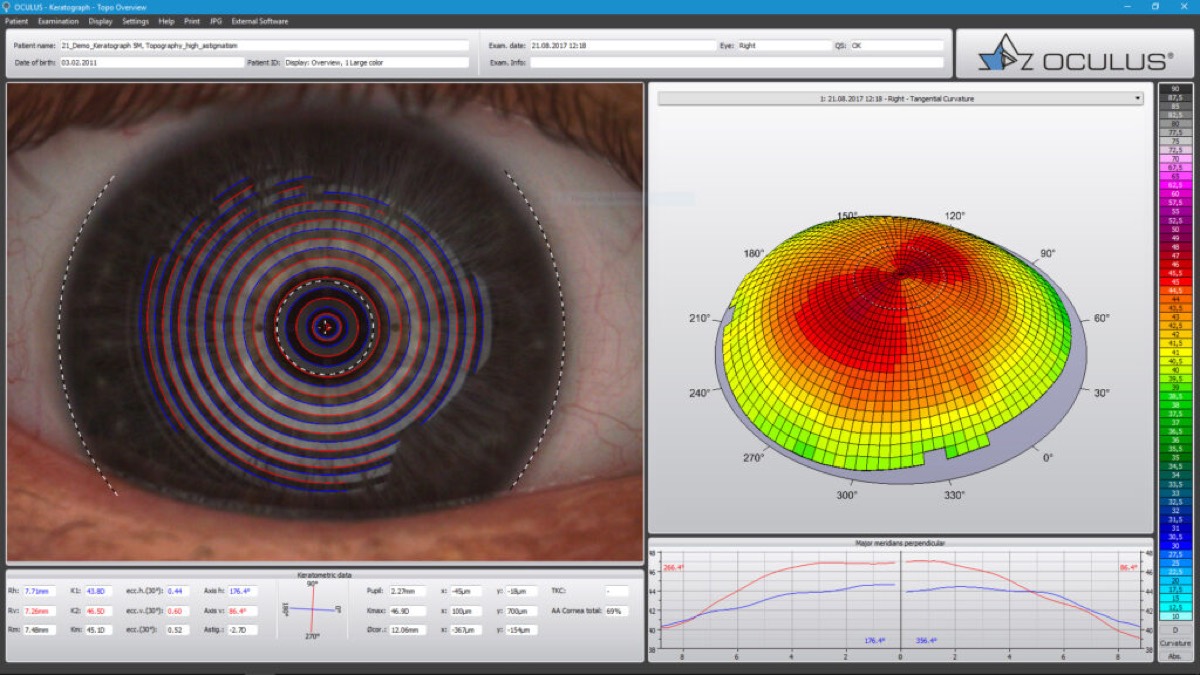
A single test is not enough. We measure the tear film, ocular surface, and meibomian glands with painless tests, almost all of them contact-free, and the results guide your plan.
- NIBUT
Noninvasive tear breakup time: how long your tear film stays stable after a blink, with no dyes and no contact.
- Tear meniscus height (TMH)
Measures the volume of tears along the eyelid margin to show whether production is sufficient.
- Lipid layer
Evaluates the oily outer layer, the one that prevents evaporation. When it is thin, it often points to meibomian gland dysfunction.
- Meibography
Shows the structure and condition of the meibomian glands. Gland loss is usually irreversible, so catching it early is key.
- Ocular redness
Maps inflammation of the conjunctiva and sclera to measure severity and track changes over time.
- Corneal and conjunctival staining
Fluorescein dye to reveal dry spots and surface damage; a clear baseline for tracking progress.
From diagnosis to plan
We identify the dominant cause (evaporative, inflammatory, mixed, or other associated conditions), show you your images, and set a treatment goal and a follow-up plan.
Book a diagnostic visitAdvanced treatments for dry eye
In addition to medical treatment, therapies aimed at the cause of evaporative dry eye and meibomian gland dysfunction. The combination and the number of sessions are set according to your diagnosis.
- Infrared thermotherapy
Controlled heat that liquefies the thickened secretion of the meibomian glands and stimulates the production of new secretion.
10–15 min · a gentle feeling of warmth - Eyelid cleaning
Removes the deposits and bacterial biofilm that block the outflow of the tear film’s oil. Painless, with no downtime.
~5 min · immediate improvement in hygiene - Meibomian gland expression
Controlled release of blockages in the ducts to restore the lipid layer of the tear film.
~5 min · a brief feeling of pressure - Intense pulsed light (IPL)
Pulses of light on the skin below the eyes, with the eyes shielded, to reduce inflammation of the eyelid margin; especially useful in ocular rosacea.
5–10 min · warm flashes of light - Low-level light therapy (LLLT)
Low-level red light on closed eyelids, as an add-on when there is inflammation. Noninvasive and painless.
10–17 min · relaxing light exposure - Punctal plugs
Very small plugs in the tear drainage openings (puncta) that reduce drainage, so your own tears stay on the eye longer.
A few minutes · aqueous-deficient dry eye
Could it be dry eye? Find out in 3 minutes
Answer the short questionnaire and see right away how severe your symptoms are. It is based on the Ocular Surface Disease Index (OSDI), a recognized clinical index. Free, with no sign-up.
An institute devoted solely to dry eye
Instituto del Ojo Seco (Dry Eye Institute) is the ocular surface unit of Clínica Ivo, in the Anzures neighborhood, and it applies the Smart Dry Eyes concept: a structured diagnosis of the tear film, ocular surface, and meibomian glands, followed by phased treatment aimed at the cause.
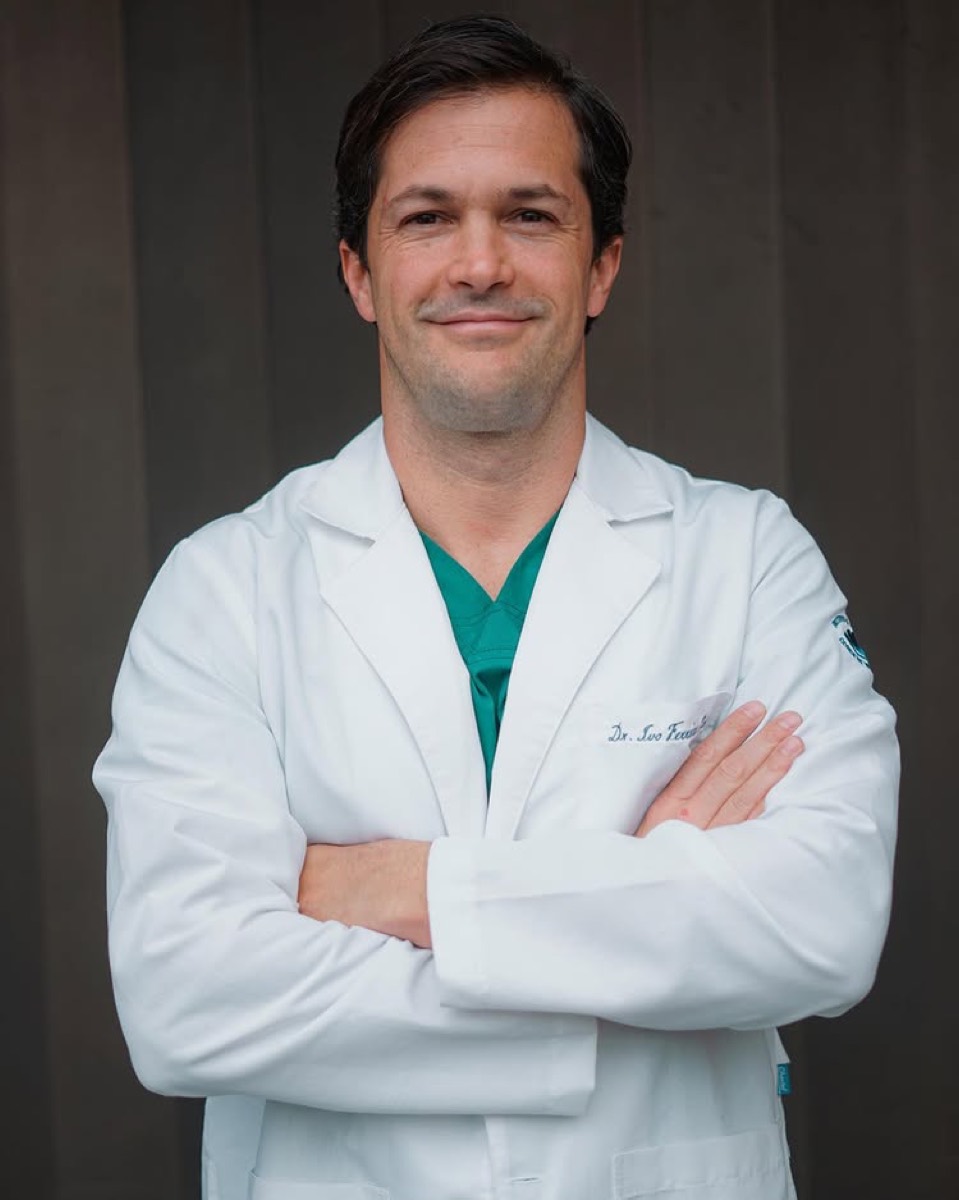
Dr. Ivo Ferreira is an ophthalmic surgeon and international surgical mentor. Together with his team, he offers patient-centered care, with detailed diagnosis, individualized recommendations, and ongoing follow-up.

For ophthalmologists, optometrists, and opticians
Refer your patient with dry eye and receive the diagnostic report and the treatment plan. Your patient remains your patient.
Frequently asked questions
Why doesn’t my dry eye improve with artificial tears alone?
Because in many cases the problem is not a lack of tears, but that they evaporate, that there is inflammation, or that the meibomian glands are blocked. Artificial tears bring relief for a while, but they do not correct those causes.
Can dry eye affect vision?
Yes. The tear film is the first optical surface of the eye. When it is unstable, vision fluctuates and loses contrast, especially when you read, drive at night, or work at a screen.
Can it be cured for good?
It is a chronic disease, but in many patients it can be controlled very well with a correct diagnosis, tailored treatment, and maintenance. Follow-up is what helps prevent relapses.
Does dry eye go away on its own?
Usually not. It is a chronic disease and, without treatment, it tends to progress: the meibomian glands can atrophy, and that loss is usually irreversible. Catching it early allows for simpler treatment.
How much does dry eye treatment cost in Mexico City?
It depends on the type and severity. The first step is a complete diagnostic assessment; with the results, you receive a treatment plan with clear costs and no unnecessary therapies.
Request a dry eye assessment
If you have persistent symptoms or fluctuating vision, we can carry out a complete diagnosis and propose a treatment plan tailored to your case.