Eyelid cleaning, or blepharoexfoliation, is a professional cleaning of the eyelids done in the office: their margin and the base of the lashes are cleaned thoroughly. It removes the crusts, the lash dandruff, and the layer of bacteria that an eyelid wipe does not lift off. It takes 5 to 10 minutes and feels like tickling.
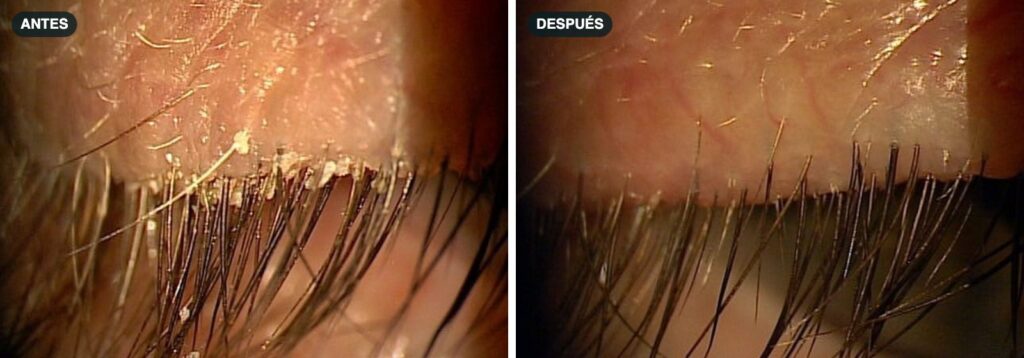
What is eyelid cleaning for?
It is used above all for blepharitis, the inflammation of the eyelid margin, which is usually chronic. You can recognize it by the flakes and crusts stuck to the base of the lashes, red eyelids, and itching or burning when you wake up. When a sleeve of dandruff, called a collarette, is seen around some lashes, there is usually Demodex, a mite that lives at the root of the lashes. We explain it in Blepharitis and Demodex.
It also prepares the way for treatment of the meibomian glands. If crusts cover the openings where the oil of your tears comes out, that oil does not come out well even after the eyelids are warmed.
What it does not do: it does not unblock a gland that is clogged on the inside, and it does not bring back glands that have already been lost. That is what heat and expression are for.
Mechanism
Why it does not come off with a wipe
The eyelid margin is not simply dirty. Bacteria can form a sticky, organized layer there, called biofilm. It behaves like dental plaque: it often does not come off completely with water or with an eyelid wipe, which is why a dentist removes it with instruments.
That layer keeps the eyelid margin inflamed, alters the oil of the glands, and, together with the crusts, blocks their openings. Removing it takes away a factor that feeds both the blepharitis and the blockage of the glands.
The session
What an eyelid cleaning is like
- 01
Before
We examine your eyelids with the exam microscope (slit lamp): how many deposits there are and whether there are signs of blepharitis or Demodex. If needed, a drop of anesthetic is applied.
- 02
During
A spinning microsponge, or a similar instrument, travels along the margins of the upper and lower eyelids with a cleaning solution. It usually feels like a slight tickling and takes five to ten minutes.
- 03
After
There may be slight redness or a brief burning sensation. You can usually go back to your activities right away.
- 04
At home
The result is maintained with daily eyelid hygiene, which we teach you how to do. When the cleaning should be repeated depends on how fast the deposits come back; often, every 4 to 6 months.
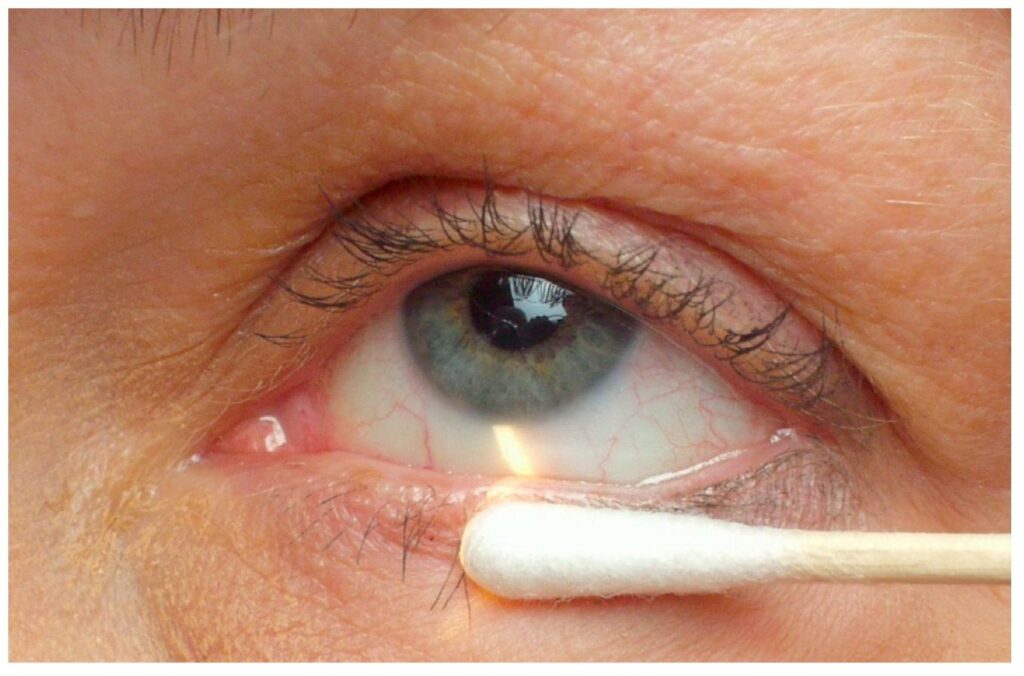
Who it is for
Who it is for
- Crusts, flakes, or dandruff on your lashes.
- Red, irritated eyelids that are stuck together when you wake up.
- Deposits that come back even though you clean your eyelids at home.
- As preparation for heat and gland expression.
When it isn’t suitable or has limits
- With an acute eye infection, a wound on the cornea, or recent eye surgery, it is postponed.
- It does not replace treatment of glands that are clogged on the inside.
- If you cannot stay still for a few minutes, let us know beforehand.
The devices
The cleaning is done with a special microsponge or with a comparable instrument. Two examples:
BlephEx
BlephEx LLC · USAA handpiece with a disposable microsponge that spins along the eyelid margin.
AB Max
Myco Industries · USAA rotary office instrument with a tip for cleaning the eyelid margin and a pulse mode.
We mention them so you know which technologies exist. We have no commercial relationship with these manufacturers, and naming them does not indicate which one we use: how your cleaning is done is decided according to your diagnosis.
We see you in the office, at the Instituto del Ojo Seco: Dante 6, Colonia Anzures, Mexico City. How to prepare and what to do afterward: Your treatment session.
Book your assessment
We examine your eyelids and your glands under magnification and tell you whether a professional cleaning makes sense in your case.
Common questions
Frequently asked questions
Isn’t cleaning my eyelids at home enough?
Daily hygiene is the foundation, but it does not always lift off a firmly stuck layer of bacteria or thick crusts. Professional cleaning is done under magnification and with a controlled mechanical action. Afterward, care at home maintains the result.
Does eyelid cleaning hurt?
Usually you feel only tickling or vibration. If the eyelids are very inflamed, there may be a slight, passing burning sensation.
How often does it need to be repeated?
There is no interval that works for everyone. It is often repeated every 4 to 6 months; what decides it is the condition of your eyelids, your care at home, and how quickly the deposits come back.
How well studied is it?
The studies on in-office cleaning are small. They show fewer deposits and less discomfort in people with blepharitis, but there are no large trials. That is why it is indicated when the exam shows deposits that hygiene at home does not remove.
How much does it cost?
It depends on whether it is combined with other therapies. We explain it after the assessment, before you start.
Sources
- Jones L, Craig JP, Markoulli M et al., TFOS DEWS III: Management and Therapy. American Journal of Ophthalmology, 2025. PubMed
- Geerling G, Tauber J, Baudouin C et al., The international workshop on meibomian gland dysfunction: report of the subcommittee on management and treatment. Investigative Ophthalmology & Visual Science, 2011. PubMed
From the blog